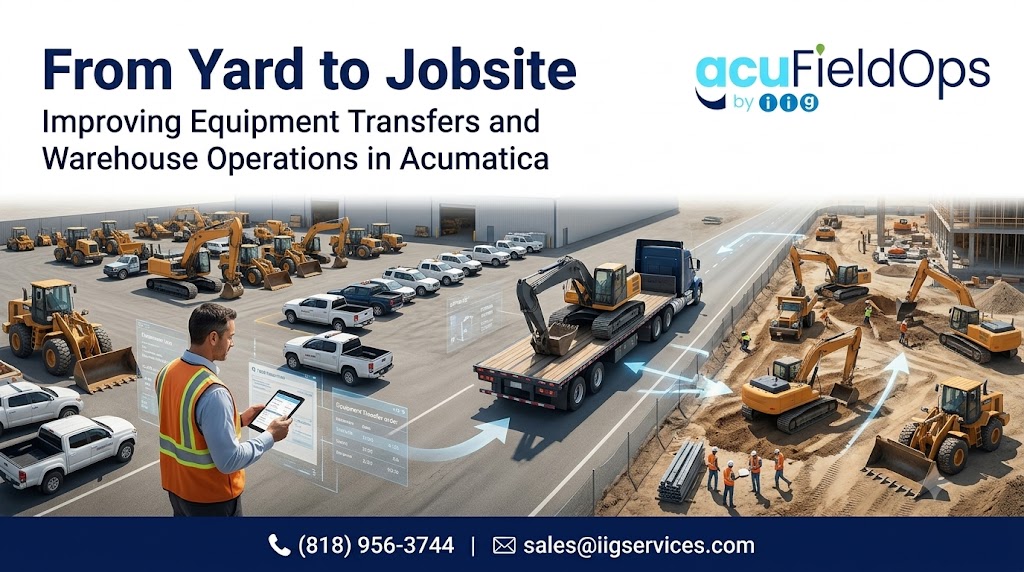
Construction and equipment-driven
businesses often manage assets across multiple warehouses, equipment yards, and
active jobsites. Moving a machine from one location to another seems
straightforward, but each move can affect equipment availability, project
schedules, rental processing, and cost tracking.
When transfers and returns are
managed through spreadsheets, paper tickets, or separate systems, teams
struggle to keep a clear view of where equipment is, where it's assigned, and
whether it's ready for its next use. A more coordinated process connects
equipment movements with the operational and financial information businesses
already use.
That's where AcuFieldOps
comes in. If you know IIG's Construction Equipment Management solution,
this is the same product under a new name. AcuFieldOps extends Acumatica to
connect equipment assignments, warehouse and yard transactions, and jobsite
operations within one ERP environment.
Same Solution, New Name
AcuFieldOps was formerly known as Construction Equipment Management. The new
name reflects the solution's broader role across field operations: equipment,
yards, jobsites, crews, and project coordination. Existing users, partners, and
anyone who has researched Construction Equipment Management are looking at the
same product.
Why Equipment Transfers Need Better
Visibility
Equipment rarely stays in one place. A machine may be stored in a yard,
assigned to a construction project, returned for servicing, and then
transferred to another jobsite.
Each move creates important
operational information. Teams need to know what equipment is moving, where
it's going, and how the move affects availability and project coordination.
Without a consistent transaction
process, information goes stale. A machine may appear available in one record
after it has already been assigned or moved. Yard staff may need to confirm
details manually, while project managers wait for updates before planning their
next activity. Recording equipment movements in a shared system keeps records
consistent and helps teams coordinate decisions across locations.
1. Coordinate Equipment Transfers
Between Locations
Moving equipment between warehouses and jobsites requires coordination between
the people who release the asset, transport it, and receive it at the
destination.
A structured transfer process
captures equipment movements as transactions instead of informal updates.
AcuFieldOps includes warehouse and yard transaction entry for moving equipment
between jobsite locations.
When transfers are recorded
consistently, teams have a clear transaction history to consult when checking
assignments and planning future moves. For businesses with multiple active
projects, this makes it easier to coordinate equipment across locations and
reduces reliance on phone calls and manual record updates.
2. Improve Equipment Assignment and
Availability
Equipment availability is more than knowing whether a machine is sitting in a
yard. Businesses also need to know whether it's assigned to a project, in
transit, or committed to another activity.
AcuFieldOps equipment assignment and
rental processing capabilities help businesses coordinate assets based on
availability and jobsite requirements. The process can include selecting
equipment by availability and recording its move to the right project or
location.
This visibility matters most when
several projects compete for the same equipment. Operations teams can spot
scheduling conflicts before they disrupt planned work.
For Acumatica partners, it's worth
asking clients how they decide whether an asset is truly available and how they
communicate assignment changes between the yard and project teams.
3. Manage Rental Movements and
Returns More Consistently
Rental movements add more to coordinate: equipment dispatch, project or
customer assignments, applicable rental rates, and the return of assets.
A consistent transaction process
helps teams document these movements and keep a clear record of equipment
activity. AcuFieldOps supports rental, transfer, and return tickets in the
yard. Its rental processing can also update revenue and costs based on
configured rates and usage.
Returns matter too. Equipment coming
back to a yard may need to be checked, serviced, or prepared before it can be
assigned again. Recording the return gives operations teams clear visibility as
the equipment moves from one stage of its lifecycle to the next.
The exact workflow depends on each
business's configuration, but the goal is the same: keep equipment movements
traceable and coordinated.
4. Connect Yard Operations With
Project and Financial Records
Equipment movements affect more than operations. They also influence project
costs, rental revenue, and equipment utilization.
When equipment transactions are
connected with Acumatica's project accounting and financial processes,
businesses spend less time reconciling disconnected operational records by
hand. AcuFieldOps equipment rental processing supports project accounting
updates, revenue and cost processing, and metered or period-based rates.
Operations teams record a movement,
and finance and project teams work from the same connected records. That gives
businesses a stronger foundation for reviewing equipment use and related costs.
5. Build a Repeatable Process From
Dispatch to Return
A reliable equipment workflow supports the entire movement cycle:
- identifying the asset
- confirming its assignment
- recording the transfer
- tracking its use
- documenting its return
Businesses can review each stage to
find where delays or information gaps occur:
- Are transfers entered promptly?
- Can the yard team confirm current assignments?
- Are returns recorded consistently?
- Can project managers see what they need to plan the
next job?
The answers point to opportunities
to standardize warehouse and yard processes and improve coordination between
field and office teams.
Questions Acumatica Partners Should
Ask
Value-added resellers (VARs) can use these questions to uncover equipment
management challenges:
- How do you record transfers between warehouses, yards,
and jobsites?
- How do you determine which equipment is available for a
new assignment?
- How are rental movements and equipment returns
documented?
- How do yard staff communicate changes to project
managers?
- How are equipment transactions reflected in project
costs and financial records?
- Which steps still rely on spreadsheets, paper tickets,
or duplicate entry?
The answers show where AcuFieldOps,
formerly Construction Equipment Management, can bring connected equipment
workflows to the client's operations.
Connect the Yard, Jobsite, and Back
Office
Equipment transfers and warehouse operations are essential to construction
project coordination. When assignments, movements, rental transactions, and
returns are recorded consistently, businesses get a clearer view of equipment
activity across every location.
With AcuFieldOps (formerly
Construction Equipment Management), Acumatica partners can connect yard and
jobsite workflows with equipment and financial records in Acumatica.
Ready to improve equipment
visibility across your operations? Let's talk.
📞 (818) 956-3744 | ✉️ sales@iigservices.com | 🌐 www.iigservices.com
Learn more: https://www.iigservices.com/equipment-management
#Acumatica #CloudERP #AcuFieldOps
#ConstructionEquipmentManagement #EquipmentRental #YardManagement
#ConstructionTech #IIG